
When most people think about threats to a home’s structure, they picture things they can see: a cracked foundation, a damaged roof, aging wiring. But some of the most destructive forces working against a home are invisible until the damage is already done. Wood-destroying organisms, commonly referred to as WDOs, are a genuine concern for homebuyers and homeowners throughout Southwest Michigan, and a WDO inspection is one of the most important steps toward understanding whether a property is under attack before you own it.
A WDO inspection is a dedicated evaluation of a property for evidence of infestation or damage caused by insects or organisms that feed on or bore into wood. While a standard buyer’s inspection covers the visible condition of the home’s structure, a WDO inspection goes deeper into the specific signs of insect activity, fungal decay, and other wood-destroying threats that can undermine a home’s structural integrity over time. In a market like Kalamazoo, St. Joseph, Benton Harbor, and the surrounding communities of Southwest Michigan, where wooded lots, mature trees, and the region’s moisture levels create favorable conditions for these organisms, ordering a WDO inspection alongside your home inspection is a straightforward and smart decision.
What a WDO Inspection Looks For
A WDO inspection is performed by a licensed pest control professional and covers several distinct categories of wood-destroying organisms and damage. Understanding what falls within that scope helps buyers know what they are getting and what findings might mean for a property.
Termites: The Most Well-Known Wood-Destroying Threat
Termites are the organism most homebuyers are familiar with, and for good reason. Subterranean termites, the species most common throughout the Midwest, live in soil and travel upward into wood through mud tubes they construct along foundation walls, piers, and other contact points between the structure and the ground. These colonies can number in the hundreds of thousands and cause significant structural damage before any visible signs appear.
A WDO inspector looks for active mud tubes, evidence of past tube activity, and wood that has been hollowed or damaged in the pattern characteristic of termite feeding. In Michigan, subterranean termites are present throughout the lower peninsula, including the Southwest Michigan region, and their activity tends to peak during the warmer months when colonies are most active and expanding.
Carpenter Ants and Carpenter Bees
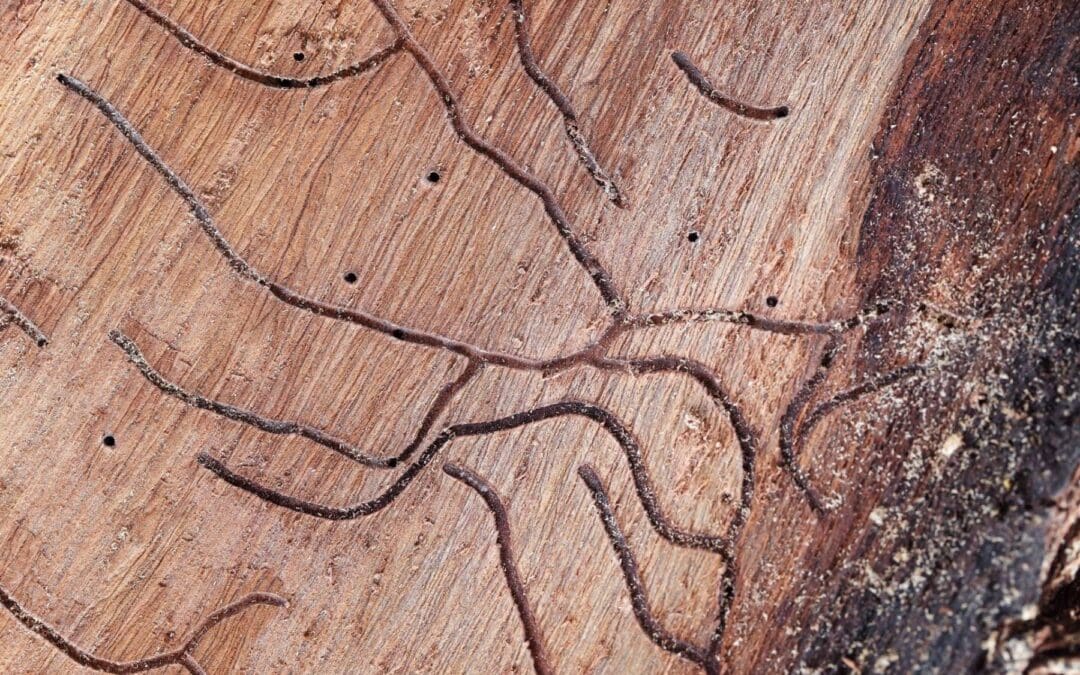
Unlike termites, carpenter ants and carpenter bees do not eat wood. They excavate it, creating galleries and tunnels for nesting. Carpenter ants are particularly common in West Michigan, especially in homes near wooded areas or with older wood framing, damaged siding, or moisture-compromised structural members. They prefer wood that is already softened by moisture and fungal decay, which means their presence is often a signal that a moisture problem exists in addition to the insect issue itself.
A WDO inspector looks for the coarse sawdust-like frass that carpenter ants leave behind, along with active galleries in exposed framing, windowsills, door frames, and other wooden components. Carpenter bee activity is typically more visible, with round entry holes in exterior wood trim, fascia, and deck framing being the primary indicator.
Wood-Destroying Fungi and Rot
Fungal decay, or wood rot, occurs when moisture infiltrates wood and creates conditions for fungal growth. While the fungi themselves are not insects, they are classified as wood-destroying organisms for inspection purposes because they degrade the structural integrity of wood in the same way that insects do. A WDO inspection documents evidence of wood rot in structural framing, sill plates, subflooring, and other critical components, noting both the extent of the damage and the likely moisture source that allowed it to develop.
In Southwest Michigan, where winters bring significant moisture, basements and crawlspaces are common locations for wood-destroying fungal activity. Homes on sloped lots, those with older drainage systems, or those with inadequately ventilated crawlspaces are particularly susceptible.
Why a Standard Home Inspection and a WDO Inspection Work Together
A general buyer’s inspection and a WDO inspection are complementary rather than redundant. A home inspector evaluates the visible condition of all major systems and structural components and will note obvious signs of pest activity or wood damage when they are apparent. A WDO inspector, however, brings specialized training and licensing specifically for identifying the signs of wood-destroying organism activity, which can be subtle, well-concealed, and easy to miss without that focused expertise.
In many real estate transactions in Michigan and across the country, lenders financing with certain loan types require a WDO inspection as a condition of the loan. Even when it is not required, ordering one proactively gives buyers a more complete picture of the property they are purchasing.
What Happens if a WDO Inspection Finds a Problem
A WDO report that identifies active infestation or significant prior damage gives buyers important information and, depending on contract terms, potential grounds to negotiate. Sellers may be asked to treat active infestations before closing, to remediate damaged structural members, or to adjust the purchase price to reflect the cost of the work. Having a documented professional finding makes those conversations far more straightforward than relying on general observations or assumptions.
Treatment and remediation costs vary depending on the organism, the extent of the activity, and the structural damage involved. Active termite infestations typically require professional treatment followed by monitoring. Structural wood damaged by termites, carpenter ants, or fungal decay may need to be sistered or replaced depending on the extent and location of the compromise.
Getting Outside in Southwest Michigan
The Kalamazoo and St. Joseph River areas offer some genuinely worthwhile outdoor experiences for those spending time in the region. The Kal-Haven Trail is a converted rail trail that runs 34 miles between Kalamazoo and South Haven along the Lake Michigan shoreline, passing through farmland, woodlands, and small communities along the way. It’s a popular route for cycling, walking, and nature viewing and gives a real sense of the Southwest Michigan landscape that makes this region worth putting down roots in.
Frequently Asked Questions About WDO Inspections
Is a WDO inspection the same as a termite inspection?
A termite inspection and a WDO inspection are closely related but not identical. A WDO inspection covers all wood-destroying organisms, including termites, carpenter ants, carpenter bees, and wood-destroying fungi, while a termite inspection may focus specifically on termites. In most cases, the more comprehensive WDO inspection is the better choice because it evaluates all the organisms that can structurally compromise a home, not just one.
Do I need a WDO inspection if the home is newer construction?
Newer homes are not immune to WDO activity. Termites and carpenter ants can establish themselves in new construction, particularly when the surrounding landscape includes wooded areas or when soil-to-wood contact exists at the foundation. A WDO inspection on a newer home may be quicker and less likely to yield significant findings, but it still provides valuable documentation and peace of mind.
Who performs a WDO inspection in Michigan?
In Michigan, WDO inspections must be performed by a licensed pest control professional, not a general home inspector. Ordering a WDO inspection in addition to your standard buyer’s home inspection ensures that both the general condition of the property and the specific question of wood-destroying organism activity are addressed by professionals trained and licensed for each respective task.
How long does a WDO inspection take, and what does it cost?
A WDO inspection for a typical single-family home generally takes between thirty minutes and one hour, depending on the size and accessibility of the property. Cost varies by company and region, but the investment is modest relative to the potential cost of undiscovered WDO damage. When ordered in conjunction with a standard buyer’s inspection, the two appointments can often be coordinated to minimize disruption to the buyer’s schedule.
Anchor Home Inspections provides home inspections to Southwest Michigan. Contact us to request an appointment.